


Production data, product data, test and measurement data, quality reports, and much more must be stored in a way that ensures long-term traceability.
Future-proof data strategies for the automotive industry
How Manufacturers and Suppliers Manage Data Efficiently, Securely, and in Compliance
 Why is data management so critical in the automotive sector?
Digital transformation generates
enormous amounts of data
From product documentation and sensor data from test runs to production and quality reports: The automotive industry generates petabytes of information every day.
But how can this data remain accessible, traceable, and secure - even decades from now?
Structured Data. Innovation. Compliance.
Only by managing data in a structured manner, consistently protecting it, and analyzing it in a targeted way can one lay the foundation for sustainable innovation and accelerated development processes.
At the same time, a structured database is crucial for ensuring traceability along complex value and supply chains and for reducing risks related to quality, safety, and liability.
Furthermore, it is a prerequisite for reliably, audit-proof, and consistently meeting regulatory and normative requirements such as ISO 9001, IATF 16949, or EU data protection guidelines.
Did you know?
- A modern vehicle generates over 25 gigabytes of data per hour during testing.
- The retention period for technical data and documentation is often more than 25 years.
- Ransomware attacks on production environments have doubled over the past three years.
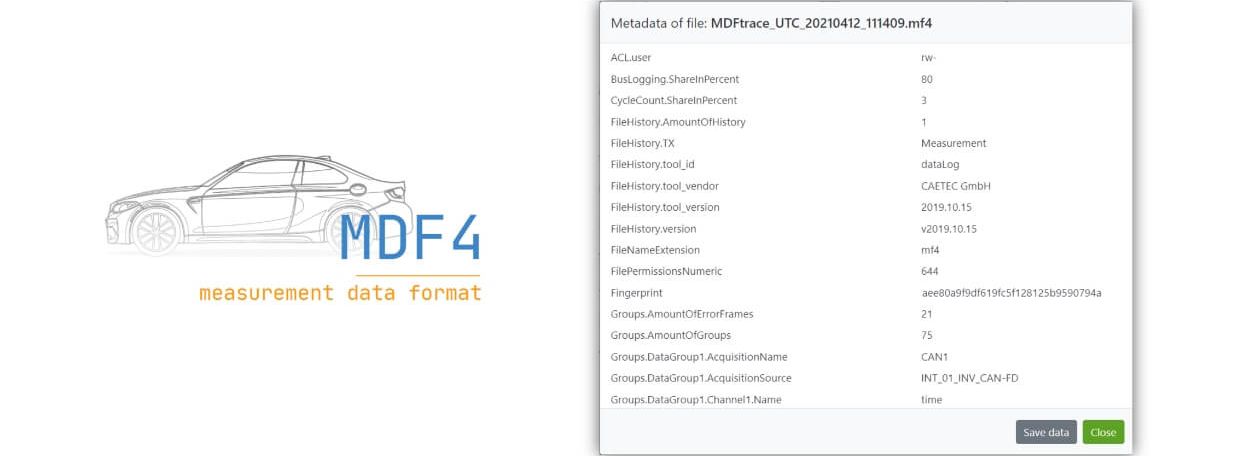
- Missing metadata costs legal departments, engineers, and developers a significant portion of their working time searching for data.
- Compliance requirements such as ISO, TISAX, and the EU GDPR mandate traceable and tamper-proof data storage.
Challenges for the automotive industry
What challenges arise in data management?
Today, companies face the challenge of managing rapidly growing and heterogeneous data sets securely, efficiently, and in compliance with regulations throughout their entire lifecycle.

Complex data sources
Development, manufacturing, testing, supplier management.
Long-term archiving
Millions of CAD/CAM and sensor data points must remain readable for decades.
Cybersecurity
Production data and backups
are targets for attacks.
Compliance
Strict standards and audit requirements necessitate secure archiving.
From Data Overload to Data Transparency
Why Centralized Management of Unstructured Data Is Essential
Hidden Knowledge in Unstructured Data
Unstructured data contains a wealth of valuable information. However, as long as it remains disorganized in emails, documents, images, or videos, its true potential remains hidden. It is difficult to locate, nearly impossible to analyze, and can only be used to a limited extent in decision-making processes.
Only through intelligent analysis methods and targeted metadata enrichment does this data gain structure and context. Content is automatically recognized, classified, and made searchable. This creates transparency regarding existing data assets and provides companies with a solid foundation.
Did you know?
- Over 70% of all stored data is never opened again.
- Duplicate files often take up to 30% of available storage space.
- Compliance risk: A lack of traceability can lead to problems during audits.
- High administrative burden: Manual searching, checking, and moving files costs time and money.
- Missing metadata: Without context, data is hard to find and virtually unusable.

Your questions - clearly answered
FAQ: Everything You Need to Know
Here you’ll find answers to the most frequently asked questions about our solutions, products, and applications - from security and archiving to data management.
What types of data must be archived in the automotive industry?
How does Blocky for Veeam® protect against ransomware?
WORM technology ensures that backups are stored in a way that cannot be altered. Cyberattacks cannot manipulate or delete them.
What legal and industry-specific requirements apply?
These include GoBD, ISO 9001, IATF 16949, TISAX, the EU GDPR, and national product liability laws.
How long must product data be retained?
Depending on the project and legal requirements, 10 to 30 years or longer.
Can large amounts of data be processed efficiently?
Yes. MetadataHub enables the automated analysis and search of millions of production data points. XtreemStore scales to handle billions of files and exabytes of storage capacity.